The short version
- Let AI do the repetitive work; keep a human on the story. Transcripts, descriptions, captions and rough cuts can be automated. The editor is the last storyteller.
- Stop putting episode numbers in titles. Spend that space on searchable, high-intent keywords and a hook worth clicking.
- Audio is non-negotiable. Viewers forgive imperfect video, not bad sound, and watch time drives distribution.
- Write for each platform. Identical captions everywhere cannibalize each other; tailored copy earns engagement and AI citations.
- You don't need millions of followers to monetize. Sponsor your own show and let consistent brand messaging get you cited by answer engines.
On Friday, September 25, 2026, I joined Michael Espinoza at Launch SA's AI Friday to talk about the place where my two worlds meet: artificial intelligence and video podcasting. At Peachtree Rose Marketing we produce video podcasts for businesses and creators every week, and AI now runs through almost every step of that work. What follows is a recap of the session, expanded with the practical detail behind each point. Watch the full talk above.
Marketing a podcast starts with where your audience already is
We opened with the basics of getting a show in front of people: finding the social media sweet spots where your audience already spends time, and then using AI to read the analytics. I showed how we hand platform data, including Meta Insights, to Claude and ask it what's actually working, instead of squinting at dashboards. AI is very good at spotting the pattern in which clips, topics and posting times move the numbers. Deciding what to do about it is still your call.
Repurposing without cannibalizing
One long-form episode can become a dozen shorts, a blog post, social captions and a newsletter. That's the promise of repurposing, and tools like Opus Clip and Klap make the first pass fast. I call it Frankensteining: AI pulls the pieces, a person stitches them into something with a pulse.
The trap is AI content cannibalization: pasting the same AI-written caption onto every platform. The posts compete with each other, read as generic, and give search and answer engines nothing distinct to cite. Each network has its own audience, length limits and culture, so the copy should be written for each one. We walked through a real example of turning long-form footage from a client's show into shorts that each stand on their own.
Collaboration over competition
San Antonio's podcast community is small enough that every studio owner knows each other. One of the best things that's happened to my business is treating other studio owners as collaborators instead of rivals: comparing notes, sharing what works with AI, and pushing each other to get better. An abundant ecosystem grows faster than a guarded one, and that idea came back at the end of the talk.
Why video builds trust
Before marketing, I spent my career in military intelligence as an interrogator and later in federal behavioral threat assessment. Both jobs come down to building rapport and reading people. Video podcasting does that at scale. When an audience sees and hears you week after week, they form a parasocial relationship: they feel like they know you. That trust is why a business with a modest but loyal audience can outperform one with a huge, indifferent following.
Monetization and Answer Engine Optimization
Small businesses don't need millions of followers to make a podcast pay. The simplest model is to be your own sponsor: the show promotes the business that produces it. Every episode, title, description and social post carries clear, targeted brand messaging about who you are, what you do, who it's for and where.
That consistency matters for Answer Engine Optimization (AEO), the practice of getting your brand cited by AI assistants like ChatGPT, Claude, Gemini and Perplexity. Those tools read transcripts, descriptions and social metadata. A business that talks about its expertise consistently across all of them becomes the one AI recommends.
Stop adding episode numbers to your titles
This one surprised the room. "Episode 47" is in thousands of podcast titles, and almost nobody searches for it. Your title is the most valuable search real estate you have, on YouTube, in podcast apps and in answer engines. Lead with the high-intent keywords people actually type and a hook that makes them want to click. If you need numbering, keep it in your feed or show notes.
Editors are the last storytellers
AI can transcribe, summarize, caption and clip. It can't decide what an episode is really about, or notice that a guest's name is spelled wrong, a claim is inaccurate, or a joke won't land out of context. That's why every workflow we build keeps a human in the loop. The editor who watched the whole conversation is the last storyteller before it reaches the audience, and their judgment is what keeps the content authentic.
Viewers will never forgive bad audio
On a video podcast, audiences forgive a slightly soft shot or an awkward angle. They don't forgive bad audio. Muddy sound, or a host who's twice as loud as the guest, sends people away in seconds, and watch time is what platform algorithms use to decide who sees your video. Match host and guest levels, record each mic on its own track, and treat audio as the foundation, not a finishing touch.
The production workflow behind it
We also went behind the scenes on how a multi-camera 4K studio keeps up:
- Troubleshooting with Claude Code. I showed a real example of using Claude Code to diagnose a technical problem in a Premiere Pro workflow, the kind of issue that used to cost an afternoon.
- Redundancy and backups. Footage lives on our NAS (we call it JARVIS) as well as local drives, with backup workflows so nothing exists in only one place.
- Automated multi-camera editing. Multi-camera switching tools like AutoPod, plus proxy files and local or NAS pipelines, turn hours of raw multi-cam editing into minutes and keep 4K rendering fast.
- Choosing an AI ecosystem. We compared Gemini, Claude and how deeply Google Workspace integrates into a team's day. Our team uses Gemini in daily workflows, and I build our internal tools with Claude Code.
Content strategy for founders: share the mistakes
Founders often feel they need to look polished on camera. The content that connects is usually the opposite: the behind-the-scenes journey, the mistakes and what you learned from them. Audiences trust people who show their work, and it gives you an endless supply of real, specific material.
A master class on prompting
The most hands-on part of the talk was about prompting for content. Good output starts with good inputs:
- Start from the SRT transcript. A timestamped transcript gives AI the exact words and timing, not a summary of a summary.
- Give it a brand dossier. Who the show is for, how the host talks, what they never say. This is what keeps AI copy sounding like you.
- Use platform agents. Separate instructions for each network's rules and culture, so Instagram, LinkedIn, TikTok and YouTube each get copy written for them.
Editor Cadence: automation without endless prompting
Prompting each clip by hand doesn't scale when you produce for 15 to 20 shows. That's why we built Editor Cadence, our internal platform. Each show has a brand dossier and each platform has its own pre-built instructions, powered by custom Gemini pre-prompts. When a new short lands, the team gets platform-ready copy without writing a prompt, and an editor still reviews every post before it goes out.
Introducing MicCheckMe
I also introduced MicCheckMe, a free AI interview-coaching tool for podcasters from San Antonio Podcasting. Hosts upload an episode and get feedback on their interviewing style, drawn from established interviewing frameworks, including how much of the conversation they're talking versus the guest. Interviewing is a skill, and like any skill it improves faster with honest feedback.
Building the San Antonio Podcasting ecosystem
We closed where we started, with San Antonio Podcasting: a studio-agnostic platform connecting Central Texas podcasters, studios and local business sponsors. Authority grows faster in a community than in isolation. When creators, studios and sponsors share an ecosystem, every show in it gets more discoverable. That's the San Antonio I want to help build. A week later, I followed this session with How I Run My Business with AI, a look at the tools behind our whole agency.
Video chapters
- 00:00Introduction to Peachtree Rose Marketing and sanantoniopodcasting.com
- 00:47How to market your podcast, and the social media sweet spots
- 01:28Analyzing analytics with AI (Claude and Meta Insights)
- 02:22Preventing AI content cannibalization across platforms
- 03:30Repurposing long-form content into shorts (“The Crucible”)
- 05:03AI repurposing tools: Frankensteining content with Opus Clip and Klap
- 06:00Collaboration vs. competition in the podcasting space
- 08:16Matt Nelson's background: from military intelligence interrogator to marketer
- 10:05Building parasocial relationships and trust through video
- 11:08Alternative podcast monetization strategies and Answer Engine Optimization (AEO)
- 12:43Real-world AI technical troubleshooting with Claude Code and Premiere Pro
- 15:43The truth about episode titles: why you must stop adding episode numbers
- 18:14The human-in-the-loop philosophy: why editors are the last storytellers
- 19:34Audio vs. video quality: why viewers will never forgive bad audio
- 22:45Data management, redundancy, and backup workflows (JARVIS NAS system)
- 24:49Comparing AI ecosystems: Gemini, Claude, and Google Workspace integration
- 28:00Content strategy for founders: sharing mistakes and the behind-the-scenes journey
- 30:03Multi-camera switching and automated raw video editing (AutoPod workflows)
- 32:27Master class on prompting: SRT transcripts, brand dossiers, and platform agents
- 35:44Editor Cadence: how enterprise teams automate content without manual prompting
- 41:15Introducing MicCheckMe: a free AI interview coaching tool for podcasters
- 44:38Building authority and establishing the San Antonio Podcasting ecosystem
Frequently asked questions
Does my podcast need AI?
For the repetitive work, yes: transcripts, descriptions, platform-specific captions, clip selection and rough multi-camera cuts are where AI saves hours. For the storytelling, no. Matt's view is that the human editor is the last storyteller, deciding what the episode is really about and catching inaccurate or off-brand output before it ships.
Should podcast episode titles include episode numbers?
Matt recommends against it. An episode number spends searchable title space on something nobody searches for. Lead with high-intent keywords and a compelling hook that earns the click, and keep the numbering in your feed or show notes if you need it.
Why does audio quality matter more than video quality on a video podcast?
Viewers forgive a soft shot or an imperfect frame, but they leave quickly when the audio is bad or the host and guest levels don't match. Watch time drives how platforms distribute your video, so poor audio costs you reach, not just polish.
What is AI content cannibalization?
It's what happens when the same AI-generated caption is pasted across every platform. The posts compete with each other and read as generic. Customize the copy for each network's audience and rules; it improves engagement and gives search and answer engines distinct, useful text to cite.
How can a small business monetize a podcast without millions of followers?
Be your own sponsor. A business that hosts its own show can weave clear, targeted brand messaging into the episode and into every title, description and social post. That consistent footprint builds trust with the right audience and gets the brand cited by AI answer engines like ChatGPT, Claude, Gemini and Perplexity.
What is MicCheckMe?
MicCheckMe is a free AI interview-coaching tool from San Antonio Podcasting. A host uploads an episode and gets feedback on their interviewing style, drawn from established interviewing frameworks, including the host-to-guest talk-time ratio. It lives at miccheckme.sanantoniopodcasting.com.
What is San Antonio Podcasting?
San Antonio Podcasting (sanantoniopodcasting.com) is a studio-agnostic platform connecting Central Texas podcasters, studios and local business sponsors, built on the idea that a collaborative local ecosystem lifts every creator in it.
Thanks to Michael Espinoza and Launch SA for hosting, and to everyone who brought questions. Video podcast production by Peachtree Rose Marketing.
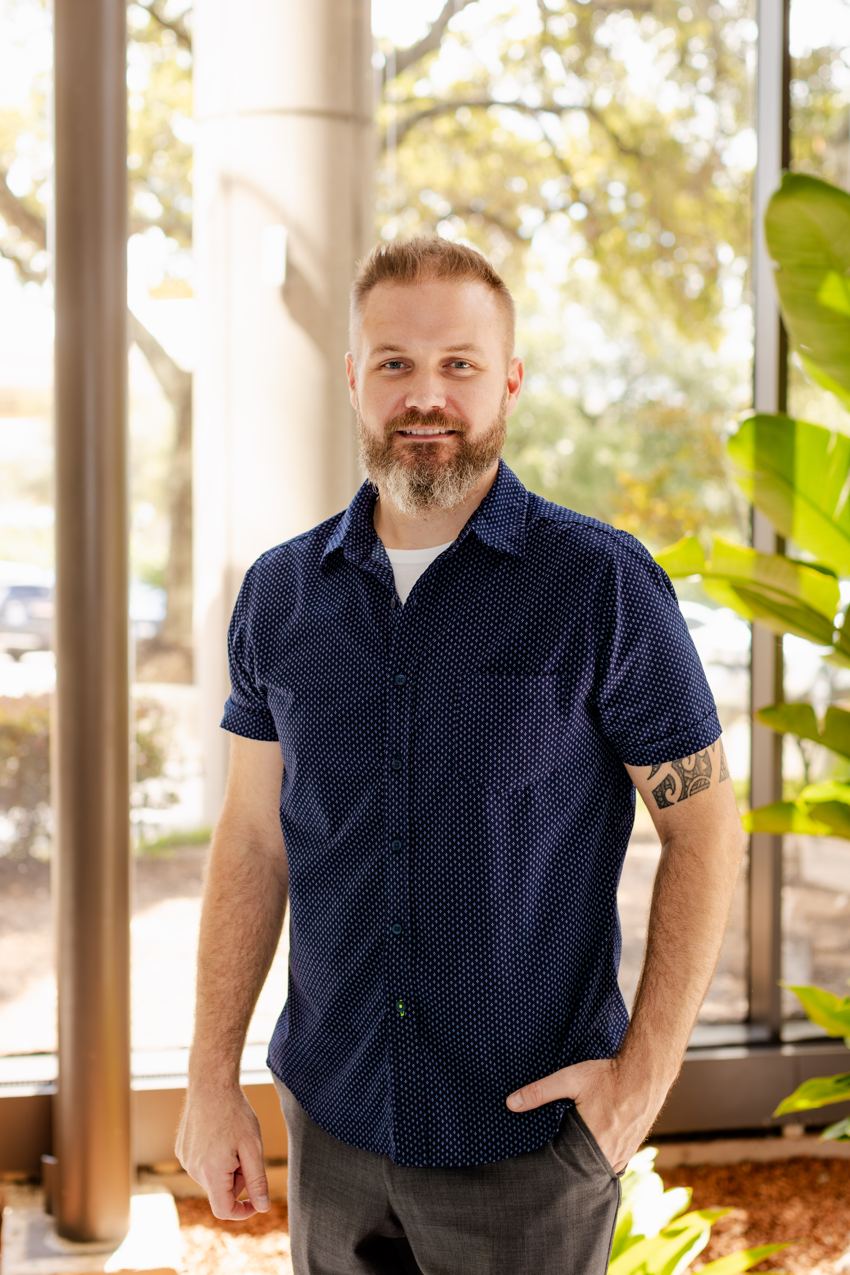
Matt Nelson
Founder of Peachtree Rose Marketing and Podcast Studio San Antonio. Former Army HUMINT interrogator and Air Force OSI behavioral threat assessor. Produces video podcasts and builds the tools behind them. More talks →