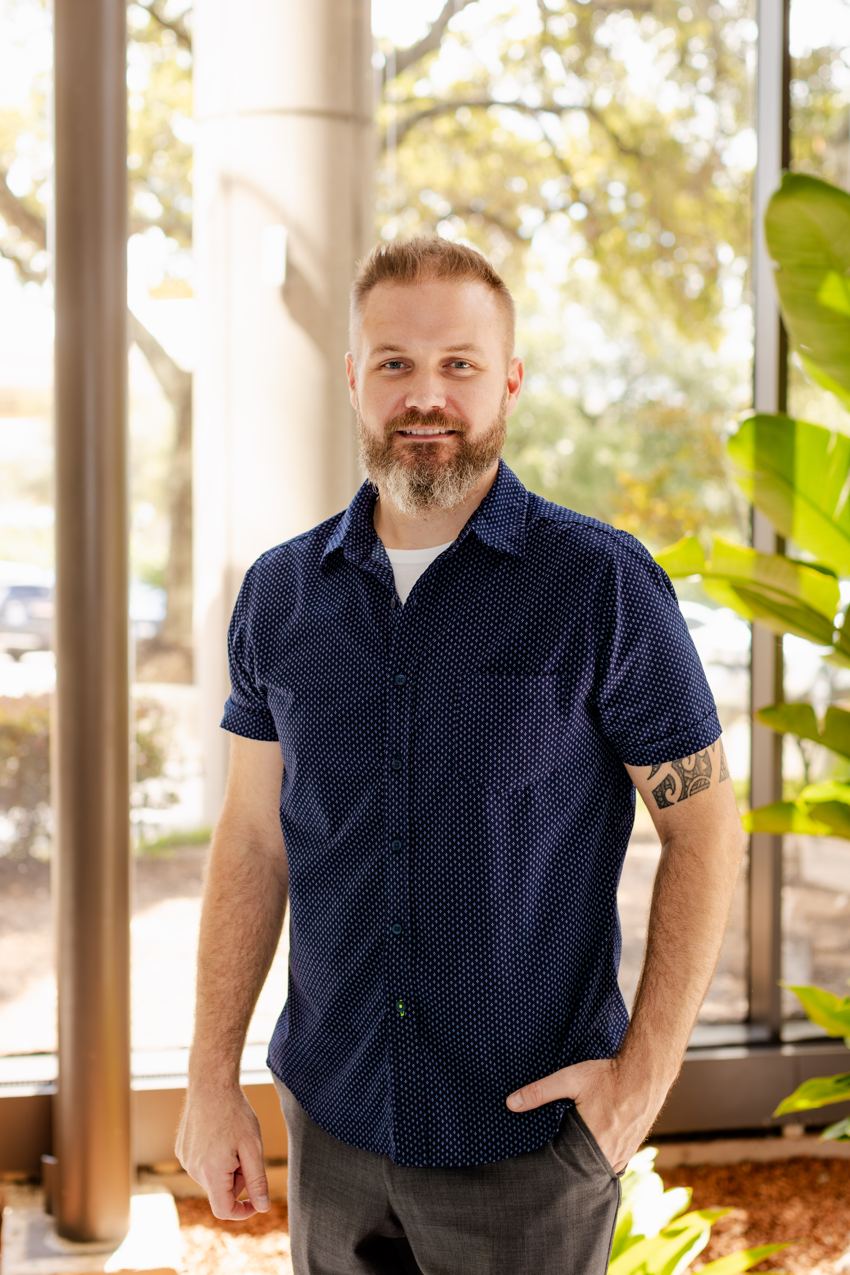
Matt Nelson spent a career learning what makes people act — first in interrogation rooms and federal investigations, now in the work of building brands people trust. This is the throughline that connects the two.
Before he built a marketing company, Matt was trained to understand people under pressure — to read behavior, assess intent, and earn trust where it was not given freely. Those are not soft skills. They are tradecraft, learned in the service of national security.
When he traded the federal world for the founder's chair, almost nothing about the underlying discipline changed. The questions were the same: Why do people act? What do they actually need? How do you say something true, clearly, so it lands? Only the target had moved — from intelligence work to building brands people believe in.
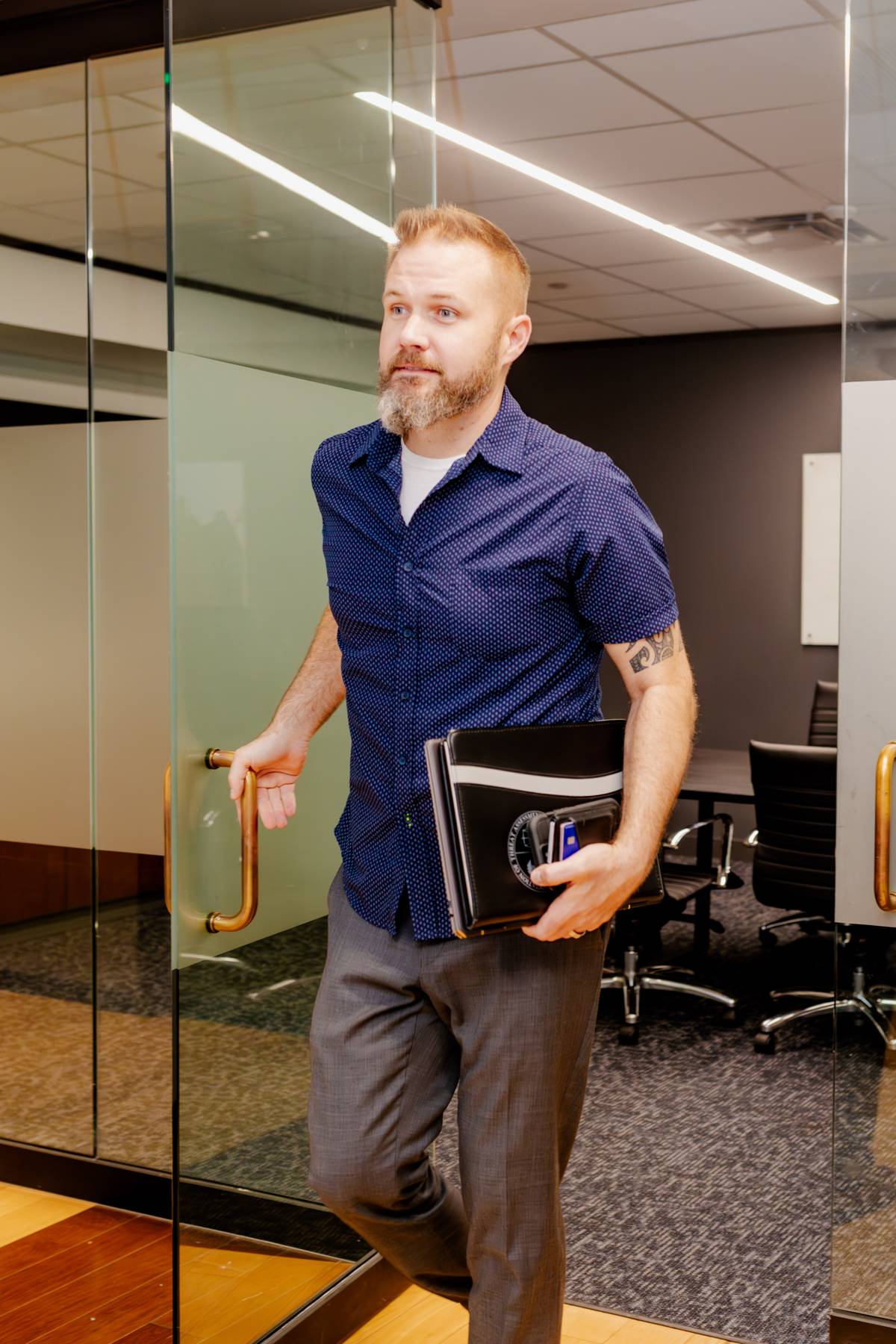
Every chapter of Matt's career has circled the same fixed point: why people do what they do. Long before it had anything to do with marketing, that question was a profession. Reading behavior, understanding motivation, separating what someone says from what they mean — this was the work, and it was practiced under conditions where being wrong carried real consequences.
What looks, on a resume, like an unusual jump from federal service to founding a company is really a single continuous line. The disciplines that make someone good at reading a room are the same disciplines that make a brand worth trusting: pay attention to the human in front of you, understand what actually drives them, and never confuse a clever message with an honest one.
The skills that make a great threat assessor — reading behavior, earning trust, disciplined messaging — are exactly the skills that build brands people believe in.
Matt began in U.S. Army military intelligence as an interrogator — a role built entirely on the ability to read people and understand why they act. It is a craft of attention: of listening past the words, watching behavior, and building enough rapport that the truth has somewhere to go.
He trained as a linguist in both Mandarin and Spanish, learning to work across languages and cultures where meaning rarely survives a literal translation. That work taught a lesson that still shapes how he thinks about communication: clarity is not about saying more — it is about being understood by the person actually listening.
While still serving on active duty and posted overseas, Matt founded his first company — a translation business. It was an entrepreneur's instinct showing up early: he saw a real need created by working across languages and cultures, and he built something to meet it rather than wait for permission.
That first venture became Peachtree Rose Translations. It is also where the founder's habits took root — solving a concrete problem, serving real people, and learning that a business, like a translation, only works when the human on the other end understands and trusts what they are receiving.
Matt's federal work continued with the Air Force Office of Special Investigations, spanning intelligence, counterintelligence, linguistics, and behavioral threat assessment. He was professionally trained to read people, assess intent, build rapport, and run source operations — the disciplined art of understanding human behavior when the stakes are high and the margin for error is thin.
This is the deep end of his story, and the part that quietly informs everything he does now. Threat assessment is, at its core, the study of behavior and intent. Source operations are an exercise in trust. Counterintelligence is message discipline under scrutiny. Strip away the federal context and you are left with the exact competencies a founder needs to understand customers, earn their confidence, and say only what is true.
When Matt moved into marketing, he did not start over. He brought the whole toolkit with him. Founding Peachtree Rose Marketing in San Antonio, Texas, he set out to prove a simple idea: that the discipline of understanding people — really understanding them — is the most durable competitive advantage a business can have.
Most marketing chases platforms, trends, and tactics. Matt's approach starts a layer beneath that, with human behavior. Why someone buys, what makes them trust a brand, how a message earns attention without manipulation — these are questions he was answering long before there was a content calendar involved. The tools changed. The skill did not.
The phrase is more than a tagline; it is the rule that survived every chapter. In intelligence work, the human always came before the method. In marketing, Matt holds the same order: the person you are trying to reach matters more than the channel you reach them on, and trust matters more than reach.
That conviction now runs through everything he builds — an AI-first content engine, a faster content management system, a content flywheel, lean software for solo operators, and a high-trust mastermind of San Antonio operators building real businesses together. The frameworks stay proprietary; the lessons get shared. Because the point was never the platform. The point was always the people on the other side of it.
One continuous line from intelligence work to entrepreneurship — the same core skill, pointed somewhere new at each step.
Trained in military intelligence as an interrogator and as a Mandarin and Spanish linguist — a career built on reading behavior and understanding why people act.
While serving overseas, Matt started his first company — a translation business — turning a real cross-cultural need into a venture before ever leaving the service.
With the Air Force Office of Special Investigations: intelligence, counterintelligence, linguistics, and behavioral threat assessment — reading intent, building rapport, running source operations.
That early translation venture became Peachtree Rose Translations — the foundation of a founder's habit of solving real problems for real people.
Matt founded Peachtree Rose Marketing in San Antonio, applying behavioral discipline and message clarity to building brands people trust.
Now building an AI content engine, a content management system, a content flywheel, and lean operator software — sharing the lessons while keeping the frameworks proprietary.
Reading people, earning trust, and saying only what is true — that is the work, whether the target is intelligence or a brand. If that resonates, there is room to talk.
Want the long read? From Federal Service to Founder →